Ellis Services Group
Kitchen Splashback Tiling
We install kitchen splashback tiles around benchtops, sinks, cooktops and cabinets, for existing kitchens and planned renovations. We assess the wall, agree the tile pattern and visible cuts, and define the edges and flexible benchtop joint before installation. Tell us what will stay and what will change so your written quote covers the right preparation.
DISCUSS YOUR SPLASHBACK ↗0425 170 688A sound wall for your new splashback
We check the wall after any existing splashback and old adhesive are removed, identifying damaged lining, uneven areas or dampness before new tiling. The quote distinguishes removal, wall repair and tile installation, including any work around retained cabinets. Unexpected damage is discussed before additional preparation proceeds.
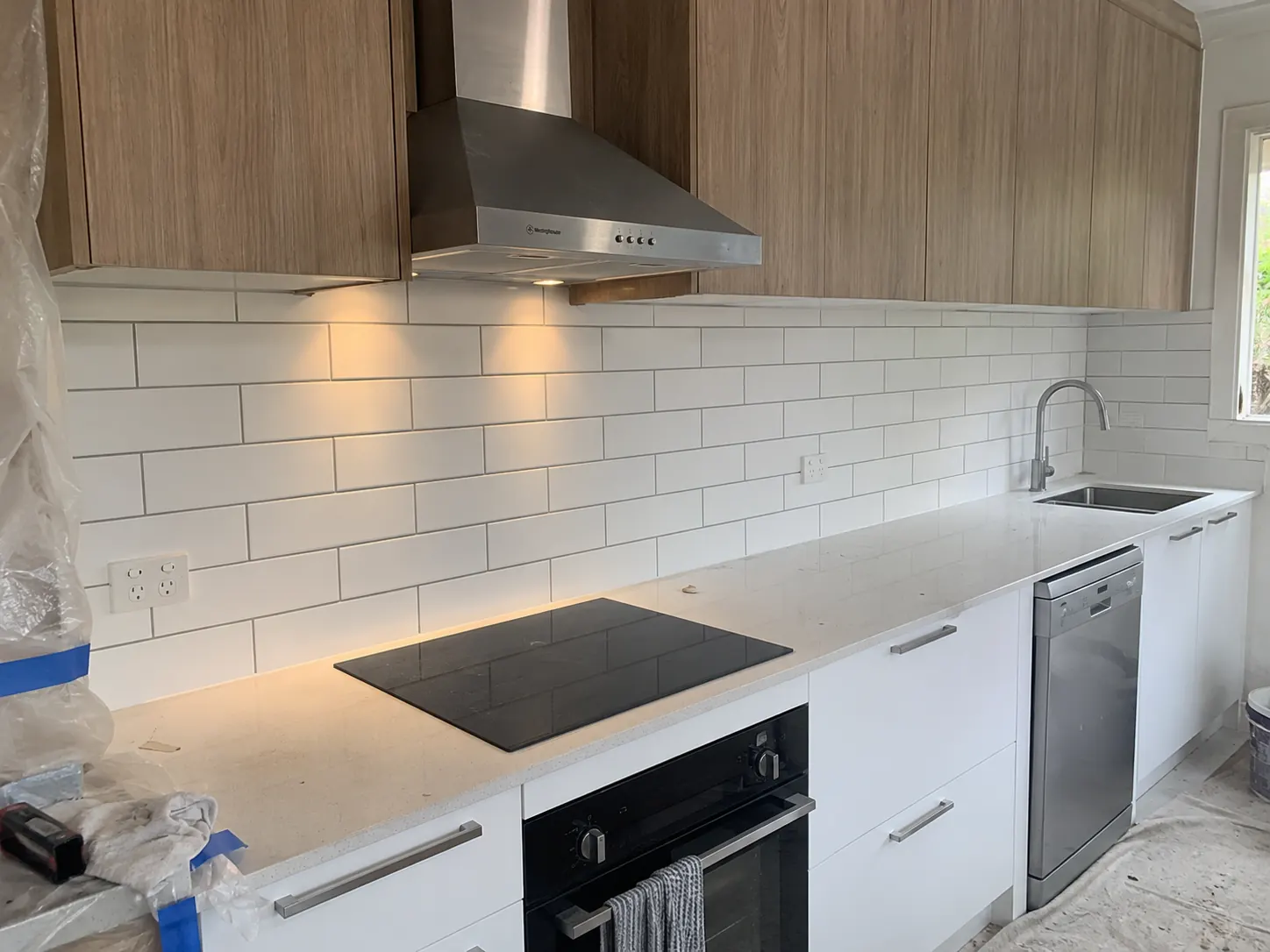
The supplied kitchen photograph shows white rectangular tiles in an offset layout, with cuts around outlets and the window edge. Use it to discuss the visible finish you want; the starting line is planned around your finished benchtop and cabinets. For a connected floor update, explore floor tile installation and transitions.
Tile patterns, precise cuts and finished edges
We agree where the splashback starts and stops, its height, the pattern and exposed edges around windows, cabinets, corners and outlets. Subway, stacked, herringbone and mosaic layouts create different cuts and quantities. Share the tile size, chosen pattern and whether tiles are already purchased so set-out, joint spacing and trims can be checked before fixing.
- Confirm the tiled height, width and termination points.
- Agree outlet cutouts, corner treatment and exposed edge trims.
- Confirm tile supply, quantities, grout colour and finish.
- Identify protection and access around retained cabinetry and appliances.
We plan the tiling around any outlet or appliance changes. Electrical, gas and plumbing connections are handled by the appropriate licensed trades, with the sequence confirmed before installation.
Neat benchtop joints and splashback repairs
We clean and prepare the wall-to-benchtop junction, then apply a compatible flexible seal where movement is expected. The finishing detail connects the tiles and benchtop neatly while allowing for movement at the joint.
A replacement benchtop can leave a gap or damaged edge below retained splashback tiles. We inspect the opening and explain whether lining repair, a revised tile edge or replacement tiles can suit the available space and matching material. Wider damage or unavailable matching tiles may change the scope; our tile repair and replacement service explains that decision.
Tiles for the sink and cooktop
We help choose tiles and joint materials for splashes, cleaning and heat around your sink and cooktop. For the cooking area, we check the appliance installation requirements alongside the wall construction and tile system before setting the splashback height.
For wall or floor dampness, discuss our kitchen waterproofing assessment separately from the visible splashback finish.
Splashback quote inclusions and kitchen access
Your splashback quote identifies removal and disposal, wall repairs, tile supply responsibility, pattern, trims, grout and the benchtop joint. We confirm access around retained cabinets and appliances, along with any separately arranged electrical, gas or plumbing work. The handover explains the material waiting stages before normal sink use, cooking and cleaning.
Use the guide to comparing tiling quotes to compare the included preparation and finish, and the drying and curing guide to discuss the waiting stages for the chosen products. General material questions remain in the tiling FAQs.
Subway, herringbone and mosaic kitchen splashbacks
Ceramic, porcelain and glass mosaics have different bodies, finishes and backing. We use the actual product to select compatible fixing and joint materials; a polished surface is not a separate tile body.
Splashback surfaces for cooking splashes and grout care
For an easy-clean splashback, we compare smooth glazed ceramic or porcelain surfaces with heavily textured tiles and small mosaics. The glaze, surface relief and amount of exposed grout affect how you reach and wipe cooking splashes. Gloss, satin and matt describe appearance; none is a promise that grease or food marks cannot remain.
We compare cement-based and epoxy grout using the selected product’s stain-resistance and cleaning information, joint width and tile compatibility.