Ellis Services Group · Practical guide
Choosing Tiles for Bathrooms, Kitchens and Pool Surrounds
Choose the tile body, finish and installation location together. We compare wet-floor suitability for bathrooms and pool surrounds, easy-clean wall surfaces and kitchen splashback care, then plan the base, adhesive, joints and edges for the selected product.
Discuss your tile choice and installation →Separate material, surface, format and intended use
Porcelain and ceramic identify tile bodies; polished, matt, gloss, satin and lappato describe finishes. Rectified describes an edge treatment, while subway, mosaic and large-format describe shape or format. Pool and outdoor describe uses that still need product suitability checked. A full-body porcelain label describes the body construction, not a guarantee of grip or stain resistance.
Porcelain is a type of ceramic material, although Australian retail ranges commonly list porcelain and ceramic separately. For the tile often called 玻化砖 in Chinese, confirm the supplier’s porcelain designation; vitrified describes vitrification and is not an interchangeable name for every porcelain product. Polished describes surface polishing, glazed describes a glaze layer, and full-body or through-body porcelain describes colour or composition through the body. A glazed porcelain tile can also be polished; a glossy glaze does not itself mean polished. Glass mosaic is glass, not vitrified porcelain. Send the actual product specification, size and intended location so we can plan the installation.
Scroll sideways to compare all columns. Keyboard users: focus the table region and use the left and right arrow keys.
| Material | What the name means | Selection and installation check |
|---|---|---|
| Porcelain | Dense, low-absorption manufactured tile; polished, matt, glazed and unglazed products are different options. | Check the specific floor, wall or exterior use and finish information. |
| Ceramic | Manufactured tiles sold in wall and floor ranges; ceramic does not always mean wall-only. | Smooth glazed wall tiles can suit splashbacks; floors need a floor-rated product. |
| Natural stone | Marble, granite, travertine, limestone, sandstone, slate, basalt and quartzite identify different stones. | Specify the stone and finish, then review fixing, sealing and compatible cleaners. |
| Glass tiles and mosaics | Glass describes the facing material, not masonry glass blocks. Mosaic is a format that may also use porcelain, ceramic or stone. | Check backing, adhesive and grout compatibility; a pool product is not automatically a surround floor tile. |
| Real terrazzo | Aggregate set in a binder; terrazzo-look porcelain only imitates that appearance. | Identify the actual binder and product instructions before selecting fixing and care. |
| Cement tiles | Cement-based patterned tiles are different from fired porcelain; encaustic cement describes a product family. | Review supplier sealing, stain care and installation instructions for the selected product. |
| Terracotta | A fired-clay material; a terracotta-coloured tile may instead have a porcelain body. | Check the material field and the product’s exposure, sealing and cleaning requirements. |
| Quarry tiles | A traditional fired-clay flooring category; quarry does not mean quarried natural stone. | Confirm the specific finish and intended use rather than selecting by the name alone. |
Bathroom floors and pool edges need wet-use evidence
Start with the product’s slip-test information for the actual wet walking area and the intended use. A matt or structured porcelain finish can be a candidate, but the finish name alone does not establish suitability. At a pool, also compare barefoot comfort, sun exposure, the coping profile and cleaning. Different slip-test methods should not be treated as interchangeable labels.
We plan the tile format and cuts around floor wastes, falls, thresholds and movement joints. A wall tile, waterline mosaic or pool-interior tile is not automatically suitable for the surrounding walking surface. The installation and maintenance need to support the selected surface.
Bathroom floor and wall tiling · Pool surround and coping installation
Wall cleaning and kitchen splashes shape the surface choice
Smooth glazed ceramic and porcelain are useful comparisons for shower walls and kitchen splashbacks. Deep relief and extra mosaic joints can take more attention to clean. Glossy surfaces may show dried droplets; an easy-wipe glaze does not prevent every water mark, soap deposit or cooking stain. Review a sample and the supplier’s care information.
We check cement-based or epoxy grout against tile compatibility, joint width and the selected product’s stain and cleaning information. Flexible seals at corners and benchtops serve a different purpose from grout. Materials beside a cooktop also need to suit the appliance instructions and project requirements; tile appearance alone does not settle that detail.
Kitchen splashback materials and finishing · Wall glaze and surface care
Natural stone and look-alike tiles have different care
Marble-look or travertine-look porcelain is not marble or travertine. Real terrazzo is not terrazzo-look porcelain. Bluestone is a stone trade name: many Australian products are basalt, but the supplier’s actual stone identification still matters. A confirmed porcelain slab or panel is manufactured porcelain, not natural stone; large-format describes size rather than a new material. Product names need to be read alongside the specification.
Marble, limestone and travertine can react to acidic cleaners. Some stone, cement-based terrazzo, cement and terracotta products specify sealing and particular care. A sealer can be part of surface care, but it is not a wet-area membrane or a guarantee against every stain. Confirm the exact product before choosing cleaners or adding a treatment.
Grey-brown timber-look porcelain tiles
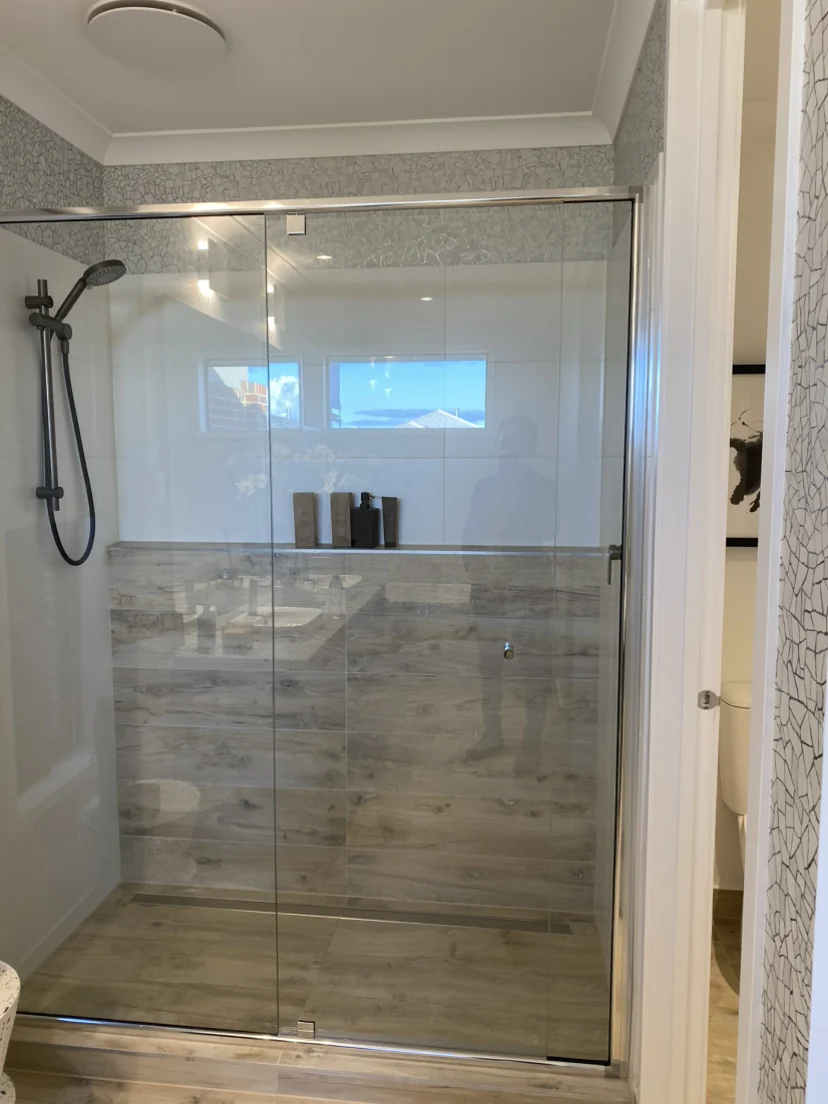
Grey-brown timber-look porcelain tiles combine a porcelain body with a wood-grain appearance. Grey-brown describes the colour and timber-look describes the pattern; neither identifies a timber species, a surface finish or a slip rating. These are tiles, distinct from solid timber, engineered timber, laminate and hybrid flooring. For a board-floor enquiry, use our timber flooring service and project record; the board material and installation method need confirmation.
Compare several tile faces and a physical sample in the room lighting. Plan grain direction, repeated motifs and grout colour together. For long planks, check substrate flatness and the manufacturer’s permitted offset and joint width; do not assume every product suits a half-tile stagger or a joint-free layout.
For shower floors, confirm the specific product’s wet-use and slip-test information, then plan tile cuts around falls and the drain. A wood-grain texture or matt label alone does not establish suitability. Porcelain tiles and grout do not replace the waterproofing system beneath them. Follow the tile and grout suppliers’ cleaning instructions.
Bring the product specification into the written scope
Share the supplier’s product name, actual material, size, thickness, finish, intended room and any slip or care information. Tell us if you already own the tiles. We assess the base, material compatibility, layout, grout and flexible joints, edge pieces and any specified sealing before confirming the installation scope.
If you are considering natural stone or another finish beyond the named porcelain and ceramic products, send its specification so we can review the preparation and fixing before agreeing the work. You can enquire before selecting or buying tiles.
Floor preparation and material choice · Outdoor tile and paver selection · Material FAQs